
Oil or serum — which should you choose?
Short answer: they're not competitors. A serum and an oil do different jobs, and understanding the difference saves you money and months of misplaced expectations.
What the serum does
The serum is the treatment. It's a light, water-based formula designed to deliver active ingredients — Redensyl, Capixyl, Procapil, Serenoa, caffeine — directly to the follicle. Its job is to stimulate the growth phase and slow down loss at the root level.
Because it's a treatment, it follows treatment rules: daily application, on the scalp (not the hair), consistently over at least 14 weeks. This is the product that moves the needle on hair loss itself.
What the oil does
The oil is support and maintenance. Rosemary, pumpkin seed, and Serenoa nourish the scalp, support circulation, and strengthen the hair you already have. Rosemary oil in particular has held its own in comparative studies against conventional treatments.
An oil alone won't stop androgenetic hair loss — anyone telling you otherwise is selling you an oil. But as part of a routine, it does what serums don't: it conditions the scalp environment where growth happens, 2–4 applications a week.
How to choose
- Active thinning, receding hairline, visible crown? Start with the serum. That's the treatment tier.
- Early days, prevention, or generally weak hair? The oil is a low-commitment start that improves the foundation.
- Serious about results? Use both. Serum daily as the treatment, oil between as nourishment. Each covers the other's blind side.
Where the derma stamp fits
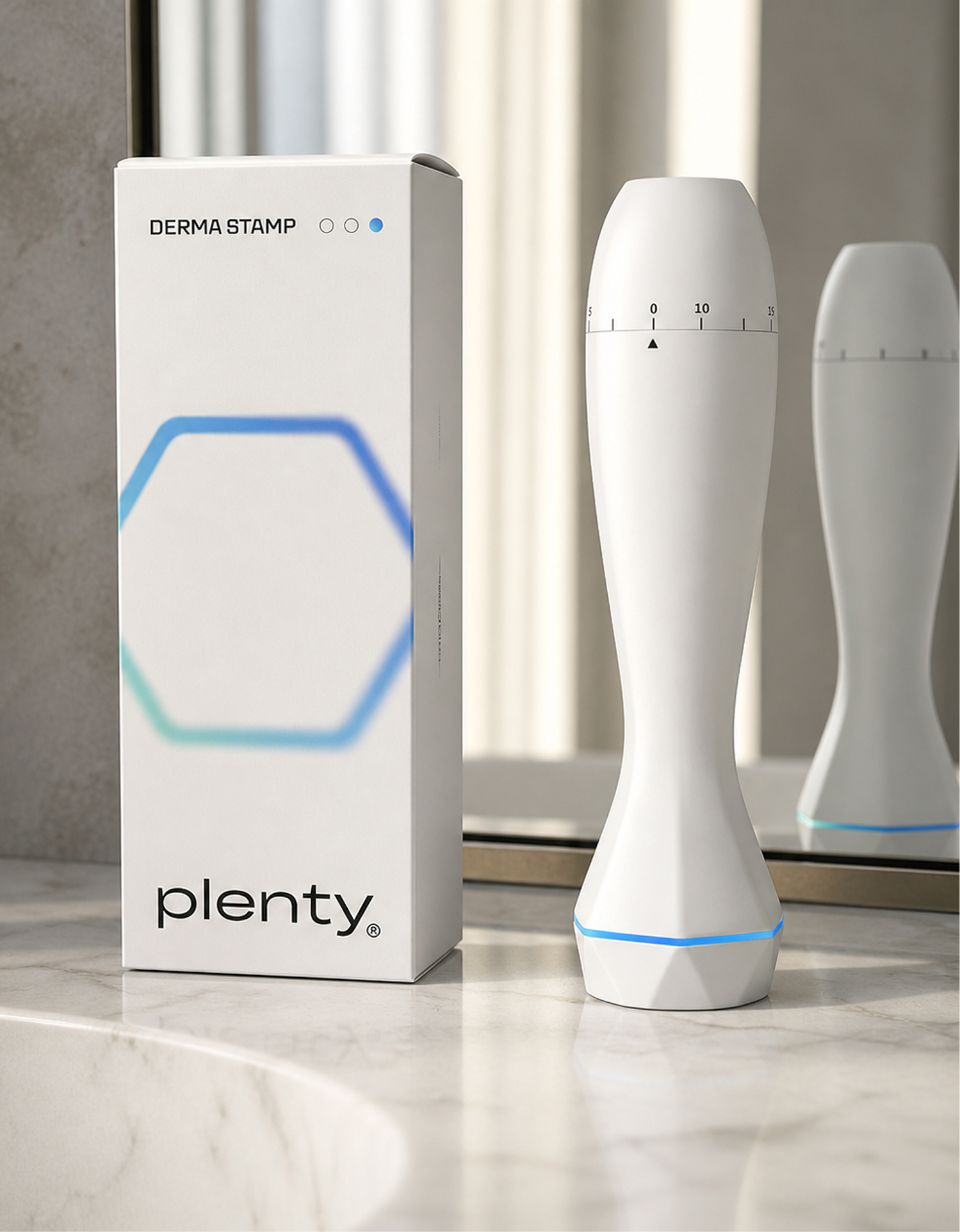
Microneedling is the multiplier. Used on clean skin before the serum, it improves how much of the actives actually reach the follicle — it's one of the best-evidenced ways to boost a topical routine. If you add one tool to the two bottles, it's this one.
That's the logic of a system: not three products fighting for the same job, but three steps in one routine — prepare, treat, nourish.
The Plenty system pairs both — an oil and a serum designed to work together.